





















Traditional Thai bodywork

What is Tok Sen?

A wooden mallet. A gentle rhythm. A conversation about your comfort.

Tok Sen is traditional Thai bodywork using a wooden mallet and peg for rhythmic tapping. Learn what the experience involves, explore common questions and understand when healthcare advice should come first.

Explore the guide
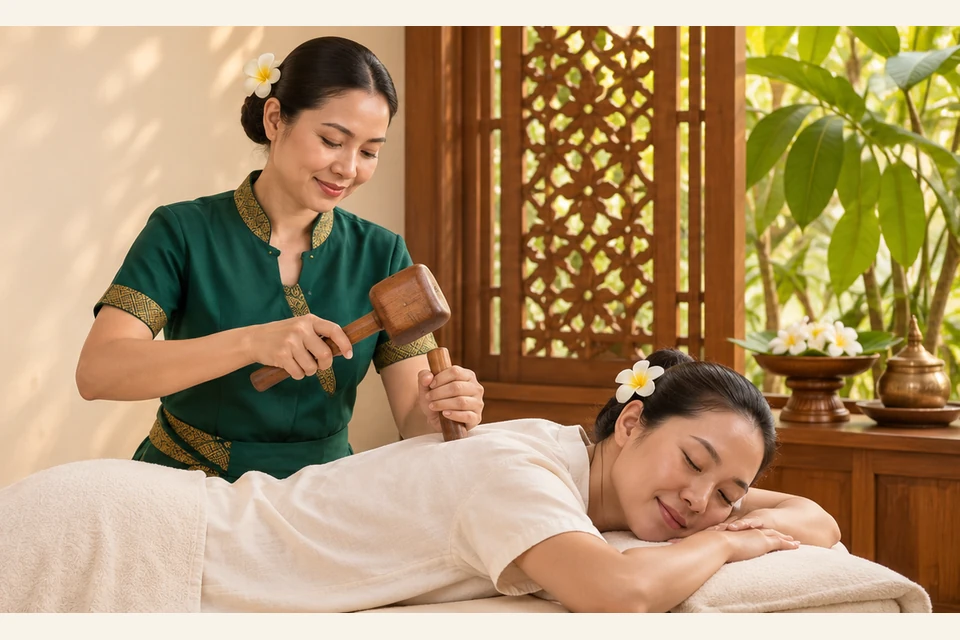
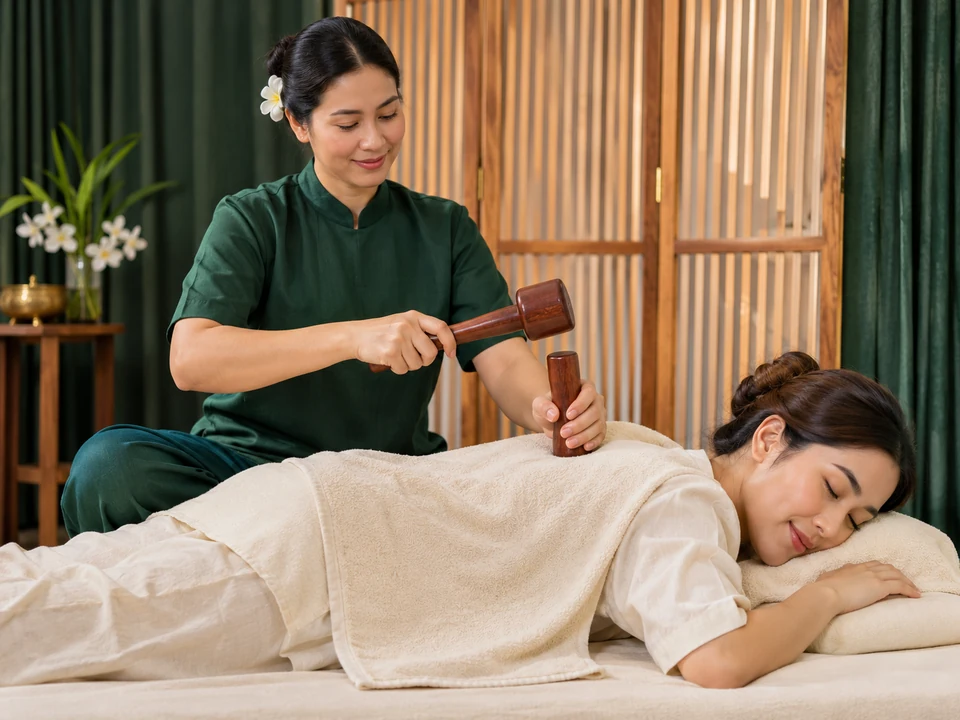
Illustrative image: a therapist using traditional wooden tools over a clothed guest in a calm Thai wellness setting
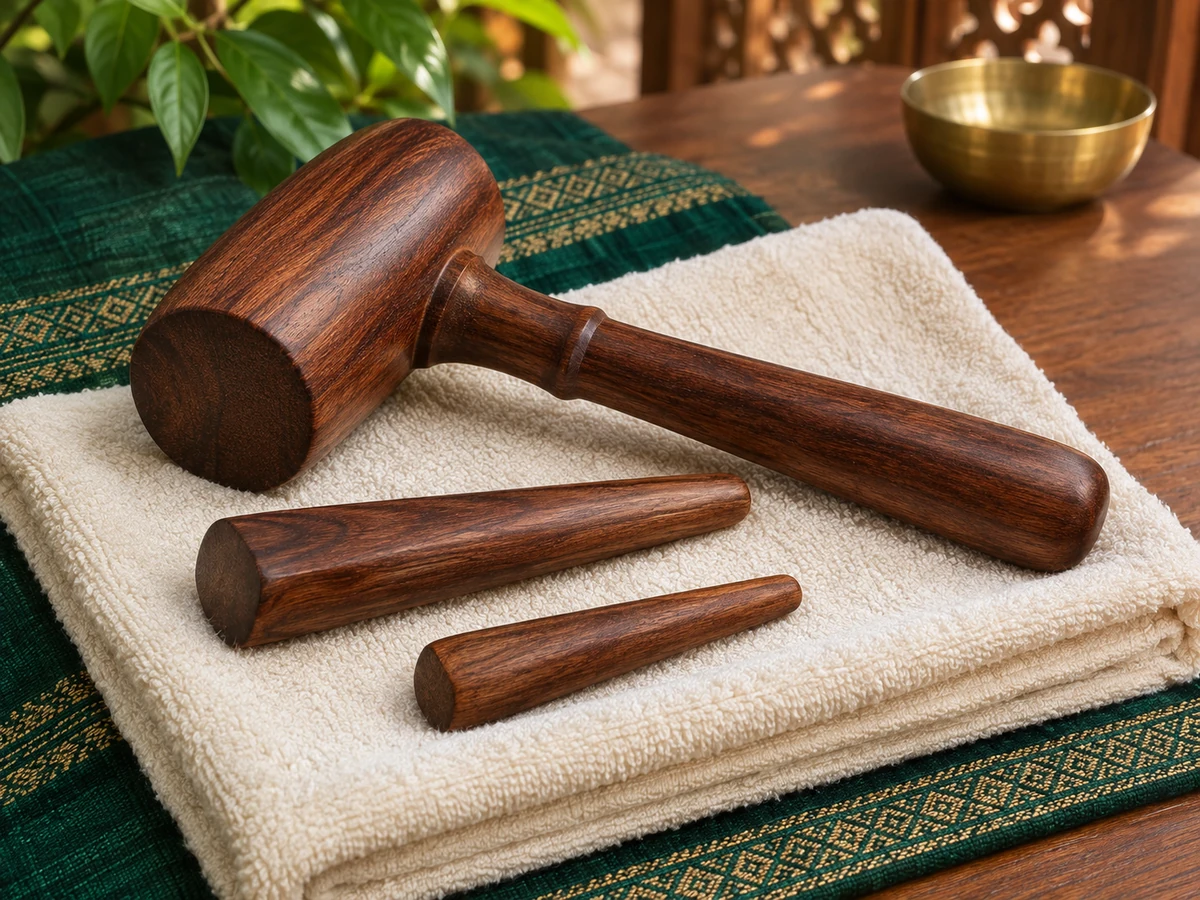
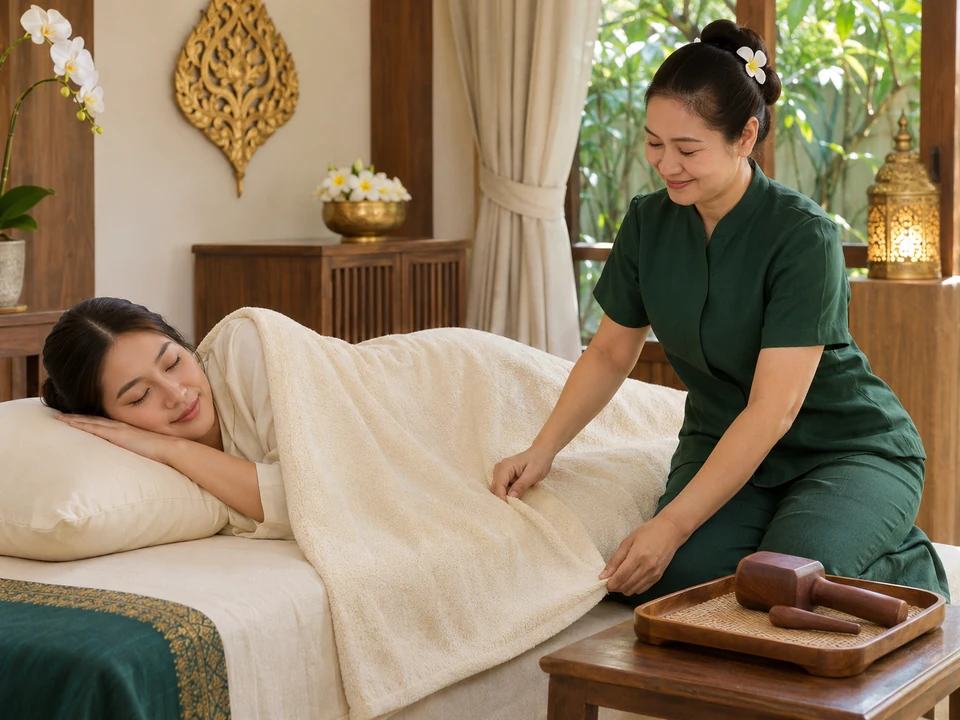
Wooden Tok Sen mallet and pegs arranged with towels in a Thai spa

What is Tok Sen?

A traditional rhythm. A personal approach to comfort.

Tok Sen is a northern Thai bodywork tradition using a wooden mallet and a blunt wooden tool to create rhythmic tapping. A practitioner discusses your comfort and the planned session before beginning.

Why choose the experience?

  • A distinctive alternative to hands-only bodywork.
  • Time set aside to discuss everyday muscle tension.
  • A session pace and pressure to discuss with the practitioner.
  • A quiet, focused wellness experience.
How might it help?

Detailed guidance on this page is shown in English while reviewed translations are prepared.

A preliminary study in 20 people with shoulder symptoms reported short-term pain-related changes. That is early evidence, not a guarantee of lasting benefit or proof for the poster’s wider condition list. Research into general massage cannot automatically validate each Tok Sen claim.

Traditional descriptions refer to Sen pathways. That is a traditional explanatory framework, not proof that an online diagram identifies blocked nerves or a disease.

Sources: Tok Sen shoulder study — Yankai et al., 2023(opens in a new tab) · NCCIH: Massage therapy(opens in a new tab)

Areas of concern

Explore the topics from the poster

Choose an area or question below. Each card explains the term, what to discuss and when healthcare assessment is the better first step.

Detailed guidance on this page is shown in English while reviewed translations are prepared.

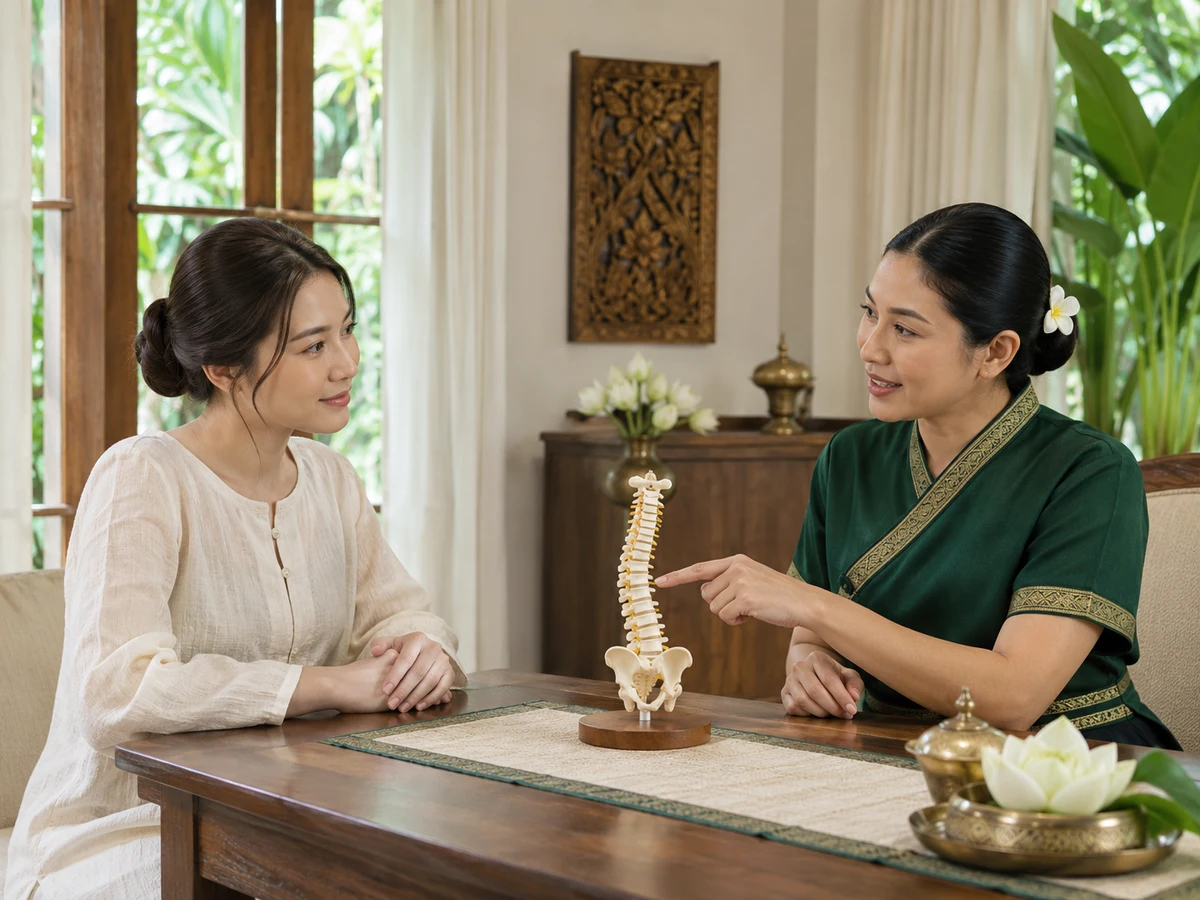
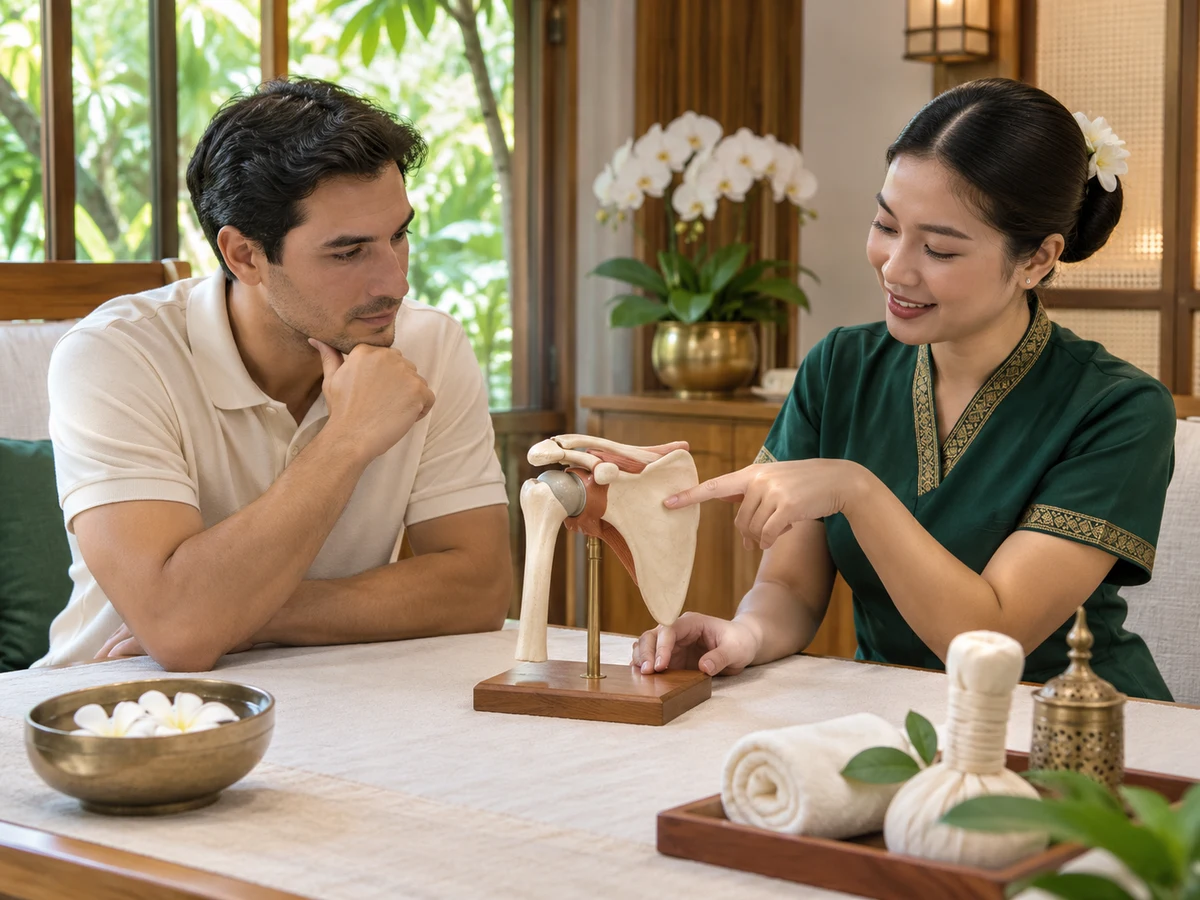
  • Illustrative professional wellness conversation or session for neck & shoulder tension

    Neck & shoulders

    Neck & shoulder tension

    Tightness or aching around the neck and shoulder muscles, often noticed during movement or after prolonged positions.

    Poster wording
    “Shoulder” · Symptom
    What to discuss with the team
    Tell the team what feels uncomfortable and discuss a comfort-focused session suited to you.
    Before deciding
    Tell the team about limited movement or previous injury. New weakness, lasting numbness or severe sudden pain needs clinical assessment.

    Sources: NHS — Shoulder pain(opens in a new tab) · Tok Sen shoulder study — Yankai et al., 2023(opens in a new tab)

  • Illustrative professional wellness conversation or session for shoulder-blade discomfort

    Neck & shoulders

    Shoulder-blade discomfort

    Discomfort around the shoulder blade is a location of pain, with several possible muscular or non-muscular causes.

    Poster wording
    “Scapular; Scapular pain” · Symptom
    What to discuss with the team
    Tell the team what feels uncomfortable and discuss a comfort-focused session suited to you.
    Before deciding
    Describe the location and activities that bring it on; persistent or unexplained symptoms need assessment.

    Sources: NHS — Shoulder pain(opens in a new tab)

  • Illustrative professional wellness conversation or session for hip & radiating leg discomfort

    Back, hips & legs

    Hip & radiating leg discomfort

    Piriformis syndrome describes irritation involving the sciatic nerve near a deep buttock muscle; similar symptoms can have other causes.

    Poster wording
    “Piriformis Syndrome” · Condition
    What to discuss with the team
    Start with qualified assessment. A relaxation session, if appropriate afterwards, is separate from treating this condition.
    Before deciding
    Arrange a clinical assessment for radiating pain, numbness or weakness rather than choosing a massage from the poster label.

    Sources: NCBI Bookshelf — Piriformis syndrome(opens in a new tab)

  • Illustrative professional wellness conversation or session for disc-related back concerns

    Back, hips & legs

    Disc-related back concerns

    A herniated disc is a bulging or displaced spinal disc that may irritate nearby nerves.

    Poster wording
    “Herniated Nucleus Pulposus” · Condition
    What to discuss with the team
    Start with qualified assessment. A relaxation session, if appropriate afterwards, is separate from treating this condition.
    Before deciding
    Massage does not put a disc back in place. Obtain healthcare advice before bodywork for disc-related symptoms.

    Sources: NHS — Slipped disc(opens in a new tab)

  • Illustrative professional wellness conversation or session for everyday back discomfort

    Back, hips & legs

    Everyday back discomfort

    An ache or uncomfortable feeling in the back; the cause cannot be established from where it hurts alone.

    Poster wording
    “Back pain” · Symptom
    What to discuss with the team
    Tell the team what feels uncomfortable and discuss a comfort-focused session suited to you.
    Before deciding
    Discuss onset, injury and any symptoms travelling into the legs. Persistent or worsening pain needs assessment.

    Sources: NHS — Back pain(opens in a new tab)

  • Illustrative professional wellness conversation or session for rib & side-body questions

    Back, hips & legs

    Rib & side-body questions

    “Twisted ribs” is an unclear poster phrase, not a diagnosis this website can confirm. Describe the actual location and symptoms instead.

    Poster wording
    “Twisted ribs” · Unclear poster label
    What to discuss with the team
    Tell the team what feels uncomfortable and discuss a comfort-focused session suited to you.
    Before deciding
    Do not promise rib realignment. Chest pain, breathing difficulty or pain after trauma needs appropriate medical care.

    Sources: NHS — Broken or bruised ribs(opens in a new tab)

  • Illustrative professional wellness conversation or session for knee & leg comfort

    Back, hips & legs

    Knee & leg comfort

    Pain around the knee can arise from different joint or soft-tissue problems; it is a symptom rather than one diagnosis.

    Poster wording
    “Knee Pain” · Symptom
    What to discuss with the team
    Tell the team what feels uncomfortable and discuss a comfort-focused session suited to you.
    Before deciding
    A hot or badly swollen knee, inability to bear weight or a new injury requires assessment before massage.

    Sources: NHS — Knee pain(opens in a new tab)

  • Illustrative professional wellness conversation or session for headache & migraine questions

    Head & jaw

    Headache & migraine questions

    Migraine is a neurological condition that can include a severe headache, nausea and sensitivity to light or sound.

    Poster wording
    “Migraine” · Condition
    What to discuss with the team
    Start with qualified assessment. A relaxation session, if appropriate afterwards, is separate from treating this condition.
    Before deciding
    A comfort session is not a migraine cure. A sudden exceptionally severe headache or new neurological symptoms needs urgent medical help.

    Sources: NHS — Migraine(opens in a new tab)

  • Illustrative professional wellness conversation or session for jaw tension & tmd

    Head & jaw

    Jaw tension & TMD

    Temporomandibular disorders affect jaw movement and may cause pain, clicking or difficulty opening the mouth.

    Poster wording
    “Temporomandibular joint Disorder” · Condition
    What to discuss with the team
    Start with qualified assessment. A relaxation session, if appropriate afterwards, is separate from treating this condition.
    Before deciding
    A dentist or qualified clinician can assess persistent jaw symptoms. This card does not recommend hammer treatment on the face or jaw.

    Sources: NHS — Temporomandibular disorder(opens in a new tab)

  • Illustrative professional wellness conversation or session for desk-work muscle tension

    Everyday muscle care

    Desk-work muscle tension

    “Office syndrome” is commonly used for work-related neck, shoulder or back discomfort; it does not identify a single cause.

    Poster wording
    “Office Syndrome” · Descriptive label
    What to discuss with the team
    Tell the team what feels uncomfortable and discuss a comfort-focused session suited to you.
    Before deciding
    Discuss work positions and movement breaks. A small Tok Sen shoulder study reported short-term outcomes; it does not guarantee results for every office-related symptom.

    Sources: Tok Sen shoulder study — Yankai et al., 2023(opens in a new tab)

  • Illustrative professional wellness conversation or session for arm tingling or weakness

    Neck & shoulders

    Arm tingling or weakness

    Tingling, loss of sensation or weakness can involve nerve dysfunction and deserves assessment rather than a presumed muscle diagnosis.

    Poster wording
    “Nerves shoulder injury” · Symptom / possible nerve problem
    What to discuss with the team
    Start with qualified assessment. A relaxation session, if appropriate afterwards, is separate from treating this condition.
    Before deciding
    Do not massage away a suspected nerve injury. Seek assessment for persistent symptoms and urgent help for sudden weakness.

    Sources: NHS — Elbow and arm pain(opens in a new tab) · NCBI Bookshelf — Suprascapular nerve injury(opens in a new tab)

  • Illustrative professional wellness conversation or session for shoulder-blade & rib-area discomfort

    Neck & shoulders

    Shoulder-blade & rib-area discomfort

    The poster uses this term for the shoulder-blade and nearby rib region. A specific cause cannot be established from the label.

    Poster wording
    “Scapulocostal Syndrome” · Poster terminology
    What to discuss with the team
    Tell the team what feels uncomfortable and discuss a comfort-focused session suited to you.
    Before deciding
    Use the visitor’s symptom description. Do not represent a particular diagnosis or promise that Tok Sen corrects it.

    Sources: NHS — Shoulder pain(opens in a new tab)

  • Illustrative professional wellness conversation or session for understanding the suprascapular notch

    Neck & shoulders

    Understanding the suprascapular notch

    The suprascapular notch is a feature of the shoulder blade associated with the route of the suprascapular nerve. It is not itself a therapy.

    Poster wording
    “Suprascapular notch” · Anatomy
    What to discuss with the team
    Tell the team what feels uncomfortable and discuss a comfort-focused session suited to you.
    Before deciding
    Pain or weakness suspected to involve this nerve needs qualified assessment; no direct tapping over a presumed trapped nerve is shown or recommended.

    Sources: NCBI Bookshelf — Suprascapular nerve injury(opens in a new tab)

  • Illustrative professional wellness conversation or session for elbow & forearm discomfort

    Arms & hands

    Elbow & forearm discomfort

    Tennis elbow causes pain around the outer elbow and is often associated with repeated gripping or wrist use.

    Poster wording
    “Tennis Elbow” · Condition
    What to discuss with the team
    Start with qualified assessment. A relaxation session, if appropriate afterwards, is separate from treating this condition.
    Before deciding
    Confirm the cause of persistent pain. Any massage forms only part of an appropriately assessed plan; forceful work on a painful tendon is not shown.

    Sources: NHS — Tennis elbow(opens in a new tab)

  • Illustrative professional wellness conversation or session for wrist weakness / wrist drop

    Arms & hands

    Wrist weakness / wrist drop

    Wrist drop is difficulty lifting the wrist, often related to radial nerve dysfunction. It is different from ordinary muscle tightness.

    Poster wording
    “Wrist drop” · Clinical sign
    What to discuss with the team
    Start with qualified assessment. A relaxation session, if appropriate afterwards, is separate from treating this condition.
    Before deciding
    New loss of wrist movement needs prompt clinical assessment. The assistant must not sell Tok Sen as a nerve-repair treatment.

    Sources: NCBI Bookshelf — Wrist drop(opens in a new tab)

  • Illustrative professional wellness conversation or session for finger catching or locking

    Arms & hands

    Finger catching or locking

    Trigger finger is a catching or locking finger or thumb associated with impaired tendon movement.

    Poster wording
    “Trigger fingers (partly obscured in photo)” · Condition
    What to discuss with the team
    Start with qualified assessment. A relaxation session, if appropriate afterwards, is separate from treating this condition.
    Before deciding
    Persistent locking needs assessment. Do not pull a finger straight or tap directly on it as a demonstration.

    Sources: NHS — Trigger finger(opens in a new tab)

  • Illustrative professional wellness conversation or session for muscle strain & recovery questions

    Everyday muscle care

    Muscle strain & recovery questions

    A strain is an injury involving muscle or tendon. A recent injury needs different care from everyday tension.

    Poster wording
    “Muscle Strain Injuries” · Injury
    What to discuss with the team
    Start with qualified assessment. A relaxation session, if appropriate afterwards, is separate from treating this condition.
    Before deciding
    Avoid treating an acutely injured area as a routine wellness session. Obtain assessment for significant pain, swelling or loss of function.

    Sources: NHS — Sprains and strains(opens in a new tab)

  • Illustrative professional wellness conversation or session for tender muscle spots

    Everyday muscle care

    Tender muscle spots

    A trigger point is a term used for a tender spot within a taut muscle band that may reproduce local or referred discomfort.

    Poster wording
    “Trigger point Complex” · Descriptive / clinical concept
    What to discuss with the team
    Tell the team what feels uncomfortable and discuss a comfort-focused session suited to you.
    Before deciding
    Tenderness alone is not a diagnosis. Ask for comfortable pressure and stop if the sensation becomes sharp, electrical or unpleasant.

    Sources: Tok Sen shoulder study — Yankai et al., 2023(opens in a new tab)

  • Illustrative professional wellness conversation or session for front-shoulder anatomy

    Neck & shoulders

    Front-shoulder anatomy

    This name describes tissues near the long head of the biceps tendon at the front of the shoulder. It is an anatomical label, not a massage program.

    Poster wording
    “transverse humeral ligament” · Anatomy
    What to discuss with the team
    Tell the team what feels uncomfortable and discuss a comfort-focused session suited to you.
    Before deciding
    An anatomical diagram does not establish the cause of pain or prove a treatment. Seek assessment for persistent front-shoulder symptoms.

    Sources: Snow et al. — Anatomy and histology of the transverse humeral ligament(opens in a new tab)

  • Illustrative professional wellness conversation or session for men’s pelvic-health questions

    Pelvic-health questions

    Men’s pelvic-health questions

    Erectile dysfunction means persistent difficulty getting or maintaining an erection. It may have physical or psychological contributors.

    Poster wording
    “Erectile Dysfunction; male reproductive-system chart” · Medical topic
    What to discuss with the team
    Start with qualified assessment. A relaxation session, if appropriate afterwards, is separate from treating this condition.
    Before deciding
    Discuss recurring symptoms with a qualified healthcare professional. Do not promise improved erections, fertility, prostate treatment or a “detox” from Tok Sen.

    Sources: NHS — Erectile dysfunction(opens in a new tab)

  • Illustrative professional wellness conversation or session for women’s pelvic-health questions

    Pelvic-health questions

    Women’s pelvic-health questions

    The supplied chart identifies reproductive anatomy. A chart alone does not establish a condition, a massage indication or a treatment benefit.

    Poster wording
    “The Human Female Reproductive System” · Anatomy / medical topic
    What to discuss with the team
    Start with qualified assessment. A relaxation session, if appropriate afterwards, is separate from treating this condition.
    Before deciding
    Pelvic pain or reproductive symptoms require appropriate healthcare advice. Do not claim massage corrects uterine position, prolapse or fertility problems.

    Sources: NHS — Pelvic pain(opens in a new tab)

Illustrative wellness imagery. No treatment outcomes are implied.

General information — not a diagnosis. The poster names symptoms, conditions and anatomy; it is not proof that Tok Sen treats them.

Request an appointment

Your session

A clear conversation before every technique

This is a typical wellness outline to discuss with the team, not a promise that every program follows an identical sequence. Agree what is planned and keep speaking up about comfort.

  1. Illustrative image: a therapist and guest talking at a small table before the session

    Talk first

    Discuss goals, preferences, areas to avoid and relevant health concerns privately.

  2. Illustrative image: a therapist placing her hands on a seated, clothed guest’s shoulders for a gentle warm-up

    Settle and prepare

    Agree positioning and any gentle preparation that suits the planned session.

  3. Illustrative image: a therapist using a wooden Tok Sen mallet and peg over a towel on a clothed guest

    Understand the rhythm

    Ask about the tools and planned technique. Request less intensity or stop if needed.

  4. Illustrative image: a therapist settling a light cover over a resting guest at the end of the session

    Finish comfortably

    Allow time to settle and explain any unexpected discomfort to the therapist.

  5. Illustrative image: a therapist and guest talking after the session, the guest holding a glass of water

    Ask about aftercare

    Discuss your response and any individual guidance before deciding whether to return.

Your comfort matters. So does the right assessment.

This is general information. Ask a qualified healthcare professional about persistent, worsening or unexplained symptoms. For sudden severe symptoms or new loss of strength or sensation, seek appropriate urgent care. Do not wait for a massage appointment.

In Thailand, call 1669 for a medical emergency; elsewhere use your local emergency number. 1669

Our services are professional, non-sexual wellness massage

FAQs

Questions about Tok Sen

Questions and answers are shown in English while reviewed translations are prepared.

What is Tok Sen, and how is it different from ordinary massage?

Tok Sen uses wooden tools and rhythmic tapping rather than only hands-on pressure. Traditional descriptions use Sen concepts, but those concepts are not a medical diagnosis. Ask the therapist to explain the technique and agree what feels comfortable.

Sources: Yankai et al., 2023: preliminary Tok Sen shoulder study(opens in a new tab) · Same study: full text and limitations(opens in a new tab) · Open in the FAQ & Knowledge Centre

Why might someone choose Tok Sen?

Some visitors prefer the rhythmic sensation of wooden-tool bodywork and a session focused on everyday muscle comfort. Preferences and responses vary. Ask the team to explain the planned session before deciding.

Sources: Tok Sen shoulder study — Yankai et al., 2023(opens in a new tab) · Open in the FAQ & Knowledge Centre

Can Tok Sen help with office-related shoulder tension?

A small preliminary study examined short-term shoulder outcomes, but this is not proof of a lasting cure. For familiar everyday tightness, discuss comfort options with the team. Persistent or unexplained symptoms need assessment.

Sources: Yankai et al., 2023: preliminary Tok Sen shoulder study(opens in a new tab) · NCCIH: Massage Therapy—What You Need To Know(opens in a new tab) · PubMed: Yankai et al. 2023 — Tok Sen and Thai massage for shoulder pain (preliminary trial)(opens in a new tab) · Same study: full text and limitations(opens in a new tab) · Open in the FAQ & Knowledge Centre

Can Tok Sen cure a slipped disc, nerve compression or numbness?

A wellness session cannot promise to cure these problems. Numbness, weakness or radiating pain should be assessed by a healthcare professional. Do not use an online service recommendation as a diagnosis or a reason to postpone medical care.

Sources: NCCIH: Massage Therapy—What You Need To Know(opens in a new tab) · Open in the FAQ & Knowledge Centre

What if I have wrist drop or suddenly lose grip strength?

Seek prompt medical advice for a new loss of power or feeling. Do not assume it is ordinary tightness or book tapping as a solution. Sudden arm weakness with other emergency symptoms needs emergency assessment.

Sources: NHS (UHMB): Wrist, hand and finger pain — when to seek help(opens in a new tab) · Open in the FAQ & Knowledge Centre

Can I choose Tok Sen for knee pain or a newly swollen leg?

An unassessed painful or swollen area should not be assigned a massage treatment online. New one-sided leg swelling needs urgent medical review; chest pain or breathlessness alongside it requires emergency care.

Sources: NHS: Deep vein thrombosis(opens in a new tab) · NCCIH: Massage Therapy—What You Need To Know(opens in a new tab) · Mayo Clinic: Massage therapy(opens in a new tab) · Open in the FAQ & Knowledge Centre

Does this guide recommend hammering for migraine or jaw problems?

No. The category image shows a conversation, not head or jaw tapping. Seek appropriate medical or dental advice for persistent headache or jaw problems. A sudden extremely painful headache or neurological symptoms needs emergency assessment.

Sources: NHS: Temporomandibular disorder (TMD)(opens in a new tab) · NHS: Headaches(opens in a new tab) · Open in the FAQ & Knowledge Centre

Does a reproductive-anatomy chart prove massage treats reproductive problems?

No. An anatomy chart explains structures; it does not demonstrate a treatment benefit. Recurrent reproductive or sexual-function concerns should be discussed privately with an appropriate healthcare professional. This is a medical question, not a request for sexual services.

Sources: NHS: Erection problems (erectile dysfunction)(opens in a new tab) · NHS: Pelvic organ prolapse(opens in a new tab) · Open in the FAQ & Knowledge Centre

Are the poster’s “Health X-Rays” the same as a medical examination?

No. The photographed display combines illustrations and promotional labels; it is not evidence of an imaging service or diagnosis. A clinician decides whether examination or imaging is appropriate.

Open in the FAQ & Knowledge Centre

Can I ask for gentler pressure, remain clothed or stop?

Tell the team your clothing and covering preferences before choosing a service. Agree the technique and intensity, and ask for changes whenever needed. Severe pain is not something you must tolerate.

Sources: Mayo Clinic: Massage therapy(opens in a new tab) · AMTA: What to expect at your massage session(opens in a new tab) · Healthdirect Australia: Massage therapy guide(opens in a new tab) · Open in the FAQ & Knowledge Centre

Is every condition on the banner a proven Tok Sen treatment?

No. The labels show topics advertised by that branch. They are not clinical evidence or confirmation of suitability for an individual. Use this guide to ask informed questions, and seek healthcare assessment for medical symptoms.

Sources: NCCIH: Massage Therapy—What You Need To Know(opens in a new tab) · Open in the FAQ & Knowledge Centre

See all questions in the FAQ & Knowledge Centre

References

References support general health information only. They are not evidence of a treatment benefit, a therapist’s qualifications or a branch’s service scope.

Plan your visit

Tell us what you would like to understand.

Ask about Tok Sen, discuss your comfort preferences or request help planning a professional wellness visit.

Request an appointment
Illustrative image: a calm treatment room with Tok Sen tools beside a prepared massage bed
About v2 (5 Nov 2026): supplied wording; not clinically reviewed. Long guidance, FAQ answers and references are English-only until reviewed translations exist; short labels are draft translations. Therapist training, branch scope and Karsai body areas still need owner confirmation.

Cookie preferences

This website does not use advertising, analytics or social-media tracking cookies. You can choose whether this browser remembers your language.

Cookie preferences
Read the Cookies Policy
Call Book an Appointment